by Louise A. Barcial
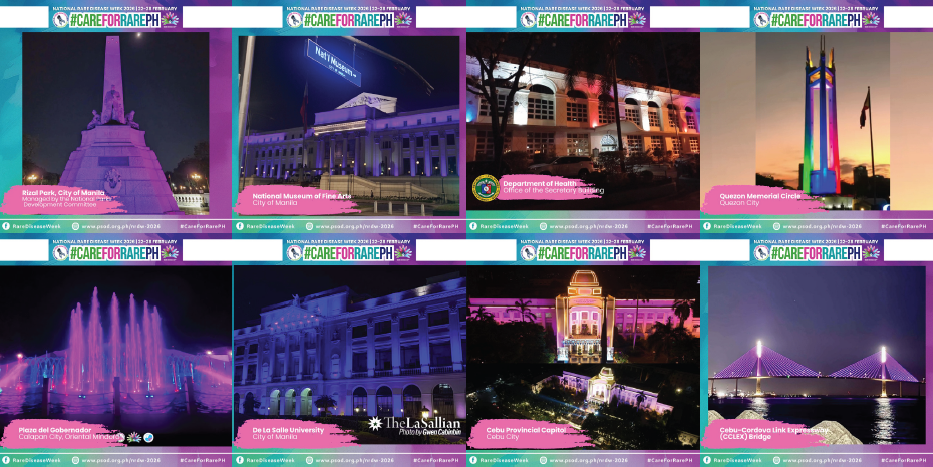
As the country joined the global observance of Rare Disease Day on February 28, the Rare Disease Week 2026 once again cast a spotlight on the often unseen struggles of Filipinos living with rare conditions. This focus brings attention to the urgent need for accessible healthcare, stronger support systems and greater public awareness for patients and families navigating life with rare diseases.
As part of this year’s observance, the #LightUpForRare campaign lit up landmarks across the country in a symbolic display of solidarity and hope for the rare disease community. The participating institutions and landmarks included the DOH Office of the Secretary Building, Rizal Park Manila, Fort Santiago Intramuros, Quezon Memorial Circle, De La Salle University, National Museum of Fine Arts, Baguio City Hall, Plaza del Gobernador Oriental Mindoro, Cebu Provincial Capitol, Cebu Cordova Link Expressway, and Leyte Provincial Capitol.
The annual lighting initiative served not only as a visual tribute but also as a reminder of the continuing challenges experienced by many Filipinos living with rare diseases. Despite the passage of Republic Act No. 10747, or the Rare Diseases Act of the Philippines, many patients still struggle with delayed diagnosis, limited access to specialized treatment, high healthcare costs, and inadequate support systems.
Advocates continue to call for the full implementation of the law to ensure timely and equitable healthcare services for persons with rare diseases. They emphasized that patients deserve the same urgency, dignity, and protection afforded to other vulnerable sectors, including Persons with Disabilities.
Several organizations remain at the forefront of these efforts, helping bridge critical gaps in awareness, education, and patient support. Among them are the Philippine Society for Orphan Disorders (PSOD), the Institute of Human Genetics, the Newborn Screening Reference Center, and the Volunteer Youth Leaders for Health (VYLH). Through sustained advocacy campaigns, community engagement, and educational initiatives, these groups continue to empower patients and families while strengthening public understanding of rare diseases.
This year’s observance also illustrated the importance of collaboration among government agencies, healthcare institutions, patient organizations, and communities in building a more inclusive and responsive healthcare system.
As the Rare Disease Week 2026 concluded, advocates and stakeholders reaffirmed their commitment to ensuring that no patient is left unseen or unheard. The continuing message of the movement remains clear: through stronger policies, greater public awareness, and sustained government action, the Philippines can move closer to a future where persons living with a rare disease receive the care, support, and recognition they deserve.
